15/06/2026
Where do orange peels go? The journey of turning agricultural waste into biodegradable packaging with BioWraps
What happens to discarded orange peels? Discover how BioWraps transforms agricultural waste into biodegradable packaging, driving the circular economy and tackling plastic pollution.

What happens to the millions of orange peels discarded after juicing every single day 🤔?
Most of us simply toss them into the trash, completely unaware that we are throwing away a rich source of natural polymers.
Every day, countless orange peels are dumped by food processing facilities and juice bars. However, through the lens of chemical engineering and materials technology, orange peels are not waste. Their biological structure contains a high concentration of pectin, cellulose, and hemicellulose. Pectin, a complex polysaccharide, possesses exceptional film-forming properties. Meanwhile, cellulose fibers act as a reinforcing structural framework, significantly improving the mechanical strength and flexibility of the material. Furthermore, the natural essential oil compounds in orange peels offer inherent antimicrobial properties, opening up the potential for active food packaging applications.
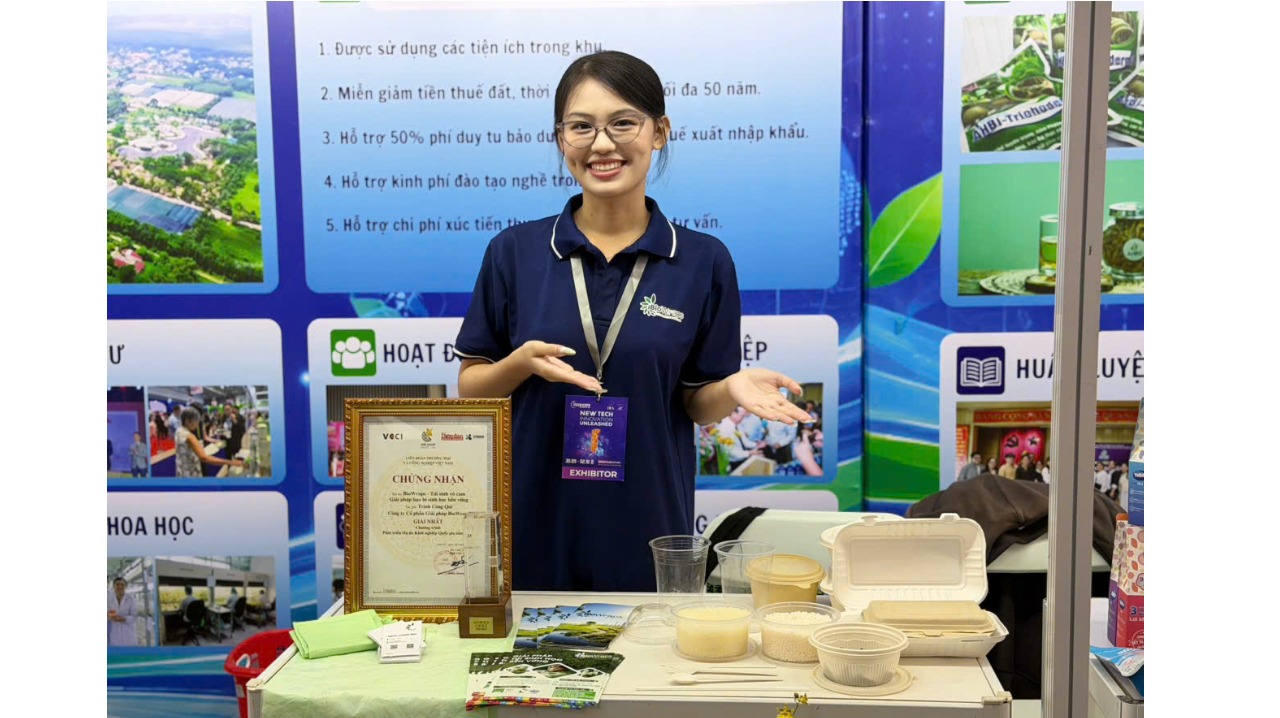
As petroleum-based plastic pollution continues to suffocate our planet, the search for alternative biopolymer materials has never been more urgent. To address this, at BioWraps, we focus on researching and optimizing the extraction and processing of these compounds to give orange peels a second life. Transforming agricultural by-products into fully biodegradable films not only tackles the plastic waste crisis but also optimizes the agricultural value chain. This is a clear manifestation of the circular economy model - where the waste of one process becomes the high-value feedstock for another.
In the near future, pectin-based biomaterials derived from orange peels hold the potential to gradually replace single-use synthetic plastics. Driven by a commitment to green growth, BioWraps will continue its R&D journey, transforming overlooked natural resources into sustainable material solutions for tomorrow